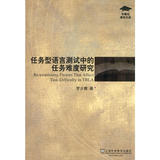
Исследование сложности задачи в тесте языка на типе задачи

Цена: 518руб. (¥24.5)
Артикул: 16217902558
Вес товара: ~0.7 кг. Указан усредненный вес, который может отличаться от фактического. Не включен в цену, оплачивается при получении.
Описание товараПродавец:当当网官方旗舰店
Рейтинг:
Всего отзывов:0
Положительных:0
Добавить в корзину
Другие товары этого продавца




¥96.72 044руб.
¥23.4495руб.
¥55.71 177руб.
¥24508руб.
 “ задача”На основании сбора большого количества связанных данных, эта книга систематически изучает этот топ“ введите— обработка информации— выход&Rdquo;... ...
1.1 The Nature of the Problem
1.2 Defining the Problem
1.3 Purpose of Investigations
1.4 Significance of the Study
1.5 Organization of Thesis
Глава 2. Преподавание английского языка и языковое тестирование в Китае
2.1 English Education in China
2.1.1 Student Population
2.1.2 Teacher Resources
2.1.3 Учебное время для изучения языка
2.1.4 Management System
2.1.5 Учебники и учебные ресурсы
2.1.6 Trends of Development
2.2 Обучение коммуникативному языку и национальные стандарты учебной программы по английскому языку
2.2.1 Обучение коммуникативному языку
2.2.2 Национальные стандарты учебной программы по английскому языку
2.3 Современные проблемы преподавания английского языка в школах
2.3.1 Цели учебной программы и языковая оценка
2.3.2 Учебная программа, преподавание и тестирование: проблемы
2.4 Подходы к решению проблем, основанные на задачах
2.4.1 Обучение языку на основе задач: проблемы
2.4.2 Task-BasedAssessment
2.5 Summary
Глава 3. Обзор литературы: языковое тестирование, оценка на основе задач и сложность задач
3.1 Языковое тестирование: вопросы и проблемы
3.2 Communicative Language Testing
3.2.1 Basic Issues
3.2.2 Commtmicative Tests: Models
3.3 Подходы, основанные на задачах, и оценка эффективности
3.3.1 Некоторые исследовательские вопросы в подходах, основанных на задачах
3.3.2 Подходы к тестированию, основанные на задачах
3.3.3 Когнитивные измерения: подходы к обработке информации
3.3.4 Значение языковой оценки
3.4 Assessing Task Difficulty
3.4.1 Defining Task Difficulty
3.4.2 Последовательность задач: обоснование и факторы сложности задач
3.4.3 Designing Tasks
3.5 Task Difficulty Matrix
3.5.1 The Norris-Brown et aL's Studies
3.5.2 Problematizing Norris et al's Matrix
3.6 Обучение оценщиков и объективные показатели
3.6.1 Матрица сложности задач: обучение оценщиков
3.6.2 Измерение выполнения задачи: меры дискурс-анализа
Chapter 4 Research Methods
4.1 Research Design
4.2 Method
4.2.1 Participants
4.2.2 Effective Tasks
4.2.3 Определение сложности задач
4.2.4 Qualitative Analyses
4.2.5 Rater Training
4.2.6 Измерение письменной успеваемости учащихся
4.3 Data Summary and Data Analysis
4.3.1 TBAReliability
4.3.2 TBA Validity
4.3.3 Data Analysis
Глава 5 Матрица сложности задач I: Развитие матрицы сложности задач IPO
5.1 Application of Norris et aL's Matrix
5.1.1 Исследование первое: применение Norris et al.'s Matrix
5.1.2 Исследования два, три и четыре: применение Norris et al.'s Matrix
5.2 Матрица сложности задач ввода-обработки-вывода
5.2.1 Создание матрицы: ввод-обработка-вывод по содержанию-форме-поддержке
5.2.2 Исследование пятое: Применение системы определения сложности задач IPO-CFS
5.2.3 StudySix: Уточнение системы определения сложности задач: IPOот Extended CFS
5.2.4 Исследование седьмое: Уточнение схемы сложности задач: IPO с помощью расширенного CFS
5.2.5 Self-Report Written Data
5.2.6 Исследование восьмое: Уточнение структуры сложности задач: интегрированное IPO от ILPS
5.3 Анализ компонентов сложности задачи
5.3.1 Анализ компонентов и уточненная матрица IPO
5.3.2 StudyNine: Уточнение структуры сложности задач: IPO путем снижения ILPS
5.3.3 StudyTen: Уточнение структуры сложности задач: IPO путем снижения ILPS
Глава 6. Матрица сложности задач IPO II: размеры и компоненты
6.1. Построение матрицы сложности задачи.
6.1.1 Определения размеров и их характеристики
6.1.2 Определения компонентов задачи в эксплуатационном плане
6.2 ACompadson between Brown etal.&Матрица #39;s и матрица сложности задач IPO
6.2.1 Similarities
6.2.2 Differences
6.3 The Original Research Questions
6.3.1 Research Question 1
6.3.2 Research Question 2
6.3.3 Research Question 3
6.3.4 Research Question 4
6.4 Summary
Глава 7. Обучение оценщиков для работы с матрицей сложности задач IPO.
7.1 Rationale
7.2 Исследование 11: Пилотное исследование по обучению оценщиков
7.2.1 Materials and Raters
7.2.2 Procedures
7.2.3 Results
7.3 Исследование 12: Установление экспертных рейтингов
7.3.1 Tasks and Instruments
7.3.2 Experts and Procedures
7.3.3 Results
7.4 Study 13: Rater Training
7.4.1 Raters and Materials
7.4.2 Procedures
7.4.3 Results
7.5 Discussion and Implications
7.5.l Обсуждение: Обучение и стандартизация оценщиков
7.5.2 Значение для обучения оценщиков
Глава 8. Дискурсивные меры по повышению успеваемости учащихся
8.1 Research Methods
8.1.1 Participants
8.1.2 Writing Tasks
8.1.3 Инструкции и форматы задач
8.1.4 Discourse Analysis Measures
8.1.5 Setting and Procedures
8.2 Results and Analysis
8.2.1 Discourse Measure Results
8.2.2 Корреляции показателей дискурса
8.2.3 Результаты аналитического рейтинга и критерии обсуждения
8.2.4 Students' Perceptions of the Writing Tasks
8.3 Обсуждения и влияние условий на меры дискурса
8.4 Conclusions
Chapter 9 Conclusions and Implications
9.1 Summary of Research Findings
9.2 Последствия, размышления и будущие исследования
9.2.1 Задачи и оценка на основе задач
9.2.2 Преподавание и изучение языка
9.2.3 Reflections and Limitations
9.2.4 Предложения по будущим исследованиям
9.3 Conclusions
References
Appendices......
............ “ задача”На основании сбора большого количества связанных данных, эта книга систематически изучает этот топ“ введите— обработка информации— выход&Rdquo;Это исследование обеспечивает надежную теоретическую основу для сложности анализа задачи в языковом тесте и предоставляет шаблон для тестеров для выбора задач.Эта книга имеет высокую справочную ценность для проведения исследования оценки языка.... ...........................