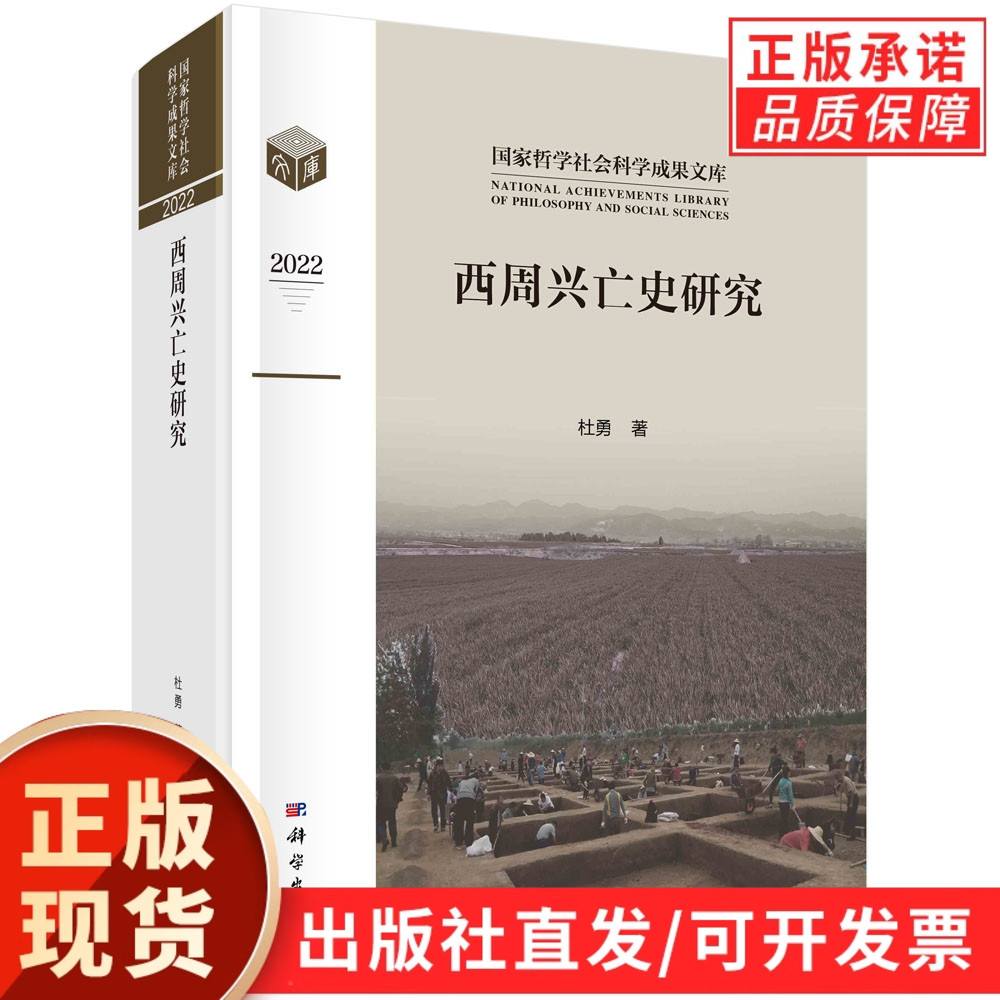
Изучите историю роста и падения династии Западной Чжоу


Цена: 5 332руб. (¥252.3)
Артикул: 773343216460
Вес товара: ~0.7 кг. Указан усредненный вес, который может отличаться от фактического. Не включен в цену, оплачивается при получении.
Описание товараПродавец:中贸欣泰图书专营店
Рейтинг:
Всего отзывов:0
Положительных:0
Добавить в корзину
Другие товары этого продавца


¥31.03656руб.
¥115.022 431руб.
¥21444руб.
¥1693 571руб.


[ 内容介绍 ]
[本书以西周政治史为研究对象,以西周十二王作为历史叙事的时间轴线,着力揭示西周国家兴衰隆替、多元一体的演进轨迹和发展规律。立足学术前沿,充分利用新出甲骨文、金文、战国竹简和考古资料,系统叙及相关历史线索和主要史实,坚持以问题为导向,注重探讨相关学术争议,诸如对先周殷周关系、武王伐纣、周公东征、三公体制、昭王南征、厉王专利、共和行政、平王东迁等重大历史问题都有深度解析,宏观与微观相融,历史与逻辑互证,探赜索隐,推陈致新,有助于加深对西周文明历史的理解和认知。 ]
[ 目录 ]
[目录 ]
[绪论 / 001 ]
[第一章 周人的崛起 / 010 ]
[第一节 周人始祖后稷的传说 / 010 ]
[一、关于后稷弃的时代问题 / 010 ]
[二、后稷族居地在关中不在晋南 / 017 ]
[三、后稷出世神话的文化意义 / 023 ]
[第二节 周人居豳时代的发展 / 029 ]
[一、公刘迁豳与创建新邦 / 029 ]
[二、豳都地望考辨 / 035 ]
[三、豳人社会生活 / 040 ]
[第三节 从迁都周原到东徙丰镐 / 047 ]
[一、周人迁岐的战略指向 / 047 ]
[二、季历继位与征伐戎狄 / 060 ]
[三、文王东进战略的强力推进 / 066 ]
[第二章 武王克商与共主嬗易 / 105 ]
[第一节 武王伐纣及其年代 / 105 ]
[一、武王继位未尝改元 / 105 ]
[二、武王伐纣路线与日程 / 110 ]
[三、周人何以]“[克昏夙有商]” / 128
[第二节 周邦政治角色的转换 / 140 ]
[一、武王开国在位年数 / 140 ]
[二、]“[民心惟本]”[的治国理念 / 143 ]
[三、武王大分封与三监封地 / 147 ]
[第三章 周公东征与东封 / 1]…
[第一节 管蔡启商以叛 / 1]…
[一、地方控制的制度性缺失 / 1]…
[二、王权名与实的分离 / 166 ]
[三、内乱与外患的交织 / 172 ]
[第二节 周公二度东征 / 175 ]
[一、成世铜器鉴别 / 176 ]
[二、周公东征 / 181 ]
[三、成王东征 / 194 ]
[第三节 东方大藩次第封建 / 199 ]
[一、卫国 / 199 ]
[二、燕国 / 208 ]
[三、鲁国 / 220 ]
[四、齐国 / 228 ]
[第四章 宅兹中国乂民 / 235 ]
[第一节 东都成周的营建 / 235 ]
[一、双城与一城之争 / 235 ]
[二、东都成周的地理位置 / 241 ]
[三、成周地名内涵的变化 / 245 ]
[第二节 怀柔与迁殷 / 251 ]
[一、徙微封宋 / 251 ]
[二、殷遗民西迁后的境遇 / 253 ]
[三、鲁卫治下的殷遗民 / 257 ]
[第三节 异姓古国的显微 / 262 ]
[一、圣胄之国 / 262 ]
[二、北国 / 265 ]
[三、 国 / 276 ]
[四、孤竹 / 294 ]
[第五章 经略四方 / 317 ]
[第一节 康王分封与征伐 / 317 ]
[一、重新认识周初治世 / 317 ]
[二、新封与徙封诸侯 / 319 ]
[三、南巡伐虎方 / 326 ]
[四、盂伐鬼方 / 337 ]
[第二节 昭王南征楚荆 / 343 ]
[一、两次南征史迹厘正 / 343 ]
[二、楚居丹阳识地 / 348 ]
[三、广惩楚荆 / 356 ]
[第六章 制度文明 / 362 ]
[第一节 嫡长子继承制 / 362 ]
[一、商代王位继承制的特质 / 362 ]
[二、周邦从立贤到立嫡的演变 / 373 ]
[三、两种性质的兄终弟及 / 381 ]
[四、继统法变革的新进境 / 385 ]
[第二节 三公之制 / 387 ]
[一、竹书《祭公》的新发现 / 387 ]
[二、三公姓氏、封地与职爵 / 390 ]
[三、三公合议制中央政府的运行 / 398 ]
[第三节 从井氏家族看世卿制度 / 410 ]
[一、井氏家族姓氏 / 410 ]
[二、井氏居邑寻踪 / 415 ]
[三、世卿制的双重功能 / 422 ]
[第七章 西周中期王道衰微 / 430 ]
[第一节 穆王政失常轨 / 430 ]
[一、肆欲西游 / 430 ]
[二、西征东伐 / 434 ]
[三、大兴赎法 / 441 ]
[第二节 共懿孝夷四王 / 446 ]
[一、王位继统的失范 / 446 ]
[二、贵族力量的膨胀 / 453 ]
[三、土地管理的松弛 / 461 ]
[第八章 厉王革典与共和行政 / 471 ]
[第一节 厉王革典的多维审视 / 471 ]
[一、对外战争成败 / 471 ]
[二、专利政策利弊 / 481 ]
[三、千秋功罪评说 / 487 ]
[第二节 共和行政的历史真相 / 492 ]
[一、]“[共伯和干王位]”[衡短论长 / 492 ]
[二、二相共和说的是非得失 / 497 ]
[三、共伯和以首席执政摄行王政 / 501 ]
[第九章 西周的衰亡 / 510 ]
[第一节 宣幽时期对外族的战争 / 510 ]
[一、对东南蛮夷的战争 / 510 ]
[二、对西戎狁的战争 / 519 ]
[三、千亩之战的危局 / 536 ]
[第二节 频世政治乱象 / 546 ]
[一、历史幻影:宣王中兴 / 546 ]
[二、祸起萧墙:褒姒夺嫡 / 555 ]
[三、自乱阵营:申曾叛周 / 562 ]
[第三节 宗周陨灭与平王东迁 / 572 ]
[一、幽王政权的倾覆 / 572 ]
[二、平王东迁的]…[折历程 / 588 ]
[三、晋、郑、秦三君年代指迷 / 597 ]
[四、历史变局中的文明接续 / 607 ]
[附录 / 617 ]
[附录一 中华文明五千年的学理问题 / 617 ]
[附录二 西周年代学研究的新视野 / 630 ]
[附录三 关于令方彝的年代问题 / 637 ]
[附录四 曾公编钟破解康宫难题 / 655 ]
[附录五 关于清华简《保训》的著作年代问题 / 660 ]
[附录六 清华简:开启古史研究新境界 / 673 ]
[参考文献 / 679 ]
[索引 / 714 ]
[后记 / 724 ]
CONTENTS
Introduction / 001
[CHAPTER 1 THT RISE OF THE ZHOU PEOPLE / 010 ]
1.1 The Mythology of the Zhou’s Ancestor Hou Ji / 010
[1.1.1 The Time of Hou Ji/Qi (the Lord of Millet) / 010 ]
[1.1.2 An Investigation into the Location of Hou Ji and his Group / 017 ]
[1.1.3 The Cultural Significance of the Mythology of Hou Ji]’s Birth / 023
[1.2 The Development of Zhou when Habilitating at Bin / 029 ]
1.2.1 Gong Liu’[s Migration to Bin and the Establishment of the New State / 029 ]
[1.2.2 An Inquiry of the Location of Bin / 035 ]
1.2.3 The Social Life at Bin / 040
1.3 Zhou’[s Move from the Zhouyuan to Fenghao / 047 ]
[1.3.1 The Strategic Orientation of the Migration to Qi / 047 ]
[1.3.2 The Succession of Jili and the Military Campagin against Rong]&Di / 060
[1.3.3 The Implementation of the Eastward Strategy under King Wen / 066 ]
[CHAPTER 2 THE CONQUEST OF SHANG AND THE DYNASTIC CHANGE / 105 ]
[2.1 The Date and Process of the Conquest of Shang / 105 ]
2.1.1 No New Regnal Era after King Wu’s Succession / 105
[2.1.2 The Itinerary of the Conquest / 110 ]
2.1.3 The Reason of“Occupation of Shang by the Dawn” / 128
[2.2 The Policy Transformation of the Zhou State / 140 ]
[2.2.1 An Inquiry of the Length of King Wu]’s Reign after the Conquest / 140
2.2.2 The Governance Idea of“Rooted in People’s Heart” / 143
[2.2.3 The Enfeoffment under King Wu and the Establishment of Three Guards / 147 ]
[CHAPTER 3 THE CONQUEST AND THE ENFEOFFMENT UNDER ZHOU GONG / 1]…
[3.1 The Rebellion of the Three Guards / 1]…
[3.1.1 The Institutional Defects regarding the Control outside the Capital Region / 1]…
3.1.2 The Separation of the Kingship’s Substance and Denomination / 166
[3.1.3 The Complex Disorders inside and outside the Zhou State / 172 ]
[3.2 The Second Military Campaign to the East / 175 ]
[3.2.1 The Identification of the Bronzes dating back to King Cheng]’s Reign Period / 176
[3.2.2 The Military Conquest Eastwards under Zhou Gong / 181 ]
[3.2.3 The Military Conquest Eastwards under King Cheng / 194 ]
[3.3 The Enfeoffment in the East / 199 ]
3.3.1 The Vassal State Wei / 199
3.3.2 The Vassal State Yan / 208
3.3.3 The Vassal State Lu / 220
3.3.4 The Vassal State Qi / 228
[CHAPTER 4 RULING THE CENTRAL KINGDOM / 235 ]
[4.1 The Establishment of the Eastern Capital Chengzhou / 235 ]
[4.1.1 The Debate between Single or Dual Capitals / 235 ]
[4.1.2 The Location of the Eastern Capital Chengzhou / 241 ]
[4.1.3 The Meaning of the Toponym Chengzhou / 245 ]
[4.2 Cherishing the Yin Adherents and the Relocation of Yin People / 251 ]
[4.2.1 The Foundation of the Song State / 251 ]
[4.2.2 The Situation of Yin People after the Relocation / 253 ]
[4.2.3 Yin People under the Supervision by Lu and Wei / 257 ]
[4.3 The History of Non-Ji (Non-Royal) States / 262 ]
[4.3.1 The States Ruled by the Adherents of Former Kings / 262 ]
4.3.2 The Bei State / 265
4.3.3 The Ji State / 276
4.3.4 The Guzhu State / 294
[CHAPTER 5 THE NATIONWIDE GOVERNANCE / 317 ]
[5.1 The Enfeoffment and Military Campaigns under King Kang / 317 ]
[5.1.1 Revisiting the Prosperous Period of the Early Western Zhou / 317 ]
[5.1.2 New Enfeoffment and Relocation of Vassal States / 319 ]
[5.1.3 The Military Campaign against Hufang in the South / 326 ]
[5.1.4 The Military Campaign against Guifang / 337 ]
[5.2 The Military Campaign again Jin-Chu in the South / 343 ]
[5.2.1 An Exploration of the Itineraries of the Two Campaigns / 343 ]
[5.2.2 An Inquiry of the Location of Danyang of Chu / 348 ]
[5.2.3 The Punishment of Jin-Chu / 356 ]
[CHAPTER 6 THE INSTITUTIONAL ACHIEVEMENTS OF THE WESTERN ZHOU / 362 ]
[6.1 The Zhou Practise of Primogeniture / 362 ]
[6.1.1 The Idiosyncrasies of the Shang Succession / 362 ]
[6.1.2 The Transformation from Choosing the Sage to Choosing the Eldest / 373 ]
[6.1.3 Two Forms of Agnatic Seniority / 381 ]
[6.1.4 The New Developments of the Succession Institutions / 385 ]
[6.2 The System of Three Excellencies / 387 ]
[6.2.1 The Finding of the Bamboo Stripes ]“Zhai Gong” / 387
[6.2.2 The Ancestral Name, the Fief, and the Title of the Three Excellencies / 390 ]
[6.2.3 The Operation of the Central Government under the System of Three Excellencies / 398 ]
[6.3 The Hereditary System from the Viewpoint of ]“Xing Family” / 410
6.3.1 The Ancestral Name of the“Xing Family” / 410
6.3.2 The Location of the“Xing Family Family” / 415
[6.3.3 The Dual Functionalities of the Hereditary System / 422 ]
[CHAPTER 7 THE DECLINE OF GOVERNANCE IN THE MIDDLE WESTERN ZHOU PERIOD / 430 ]
[7.1 The Political Disorder under King Mu / 430 ]
[7.1.1 The Parades to the West at Pleasure / 430 ]
7.1.2 The Military Campaigns / 434
[7.1.3 The Abuse of Atonement Policy / 441 ]
[7.2 The Period of King Gong, King Yi, King Xiao, and King Yi / 446 ]
[7.2.1 The Disarray of Succession / 446 ]
[7.2.2 The Dilation of Aristocrasies / 453 ]
[7.2.3 The Laxation of Land Management / 461 ]
[CHAPTER 8 THE REFORM UNDER KING LI AND THE GONGHE REGENCY / 471 ]
8.1 Multiple Aspects of King Li’s Reform / 471
[8.1.1 The Achievements and Failures of Military Campaigns / 471 ]
[8.1.2 The Merits and Detriments of the Monopolisation Policy / 481 ]
8.1.3 An Assessment of King Li’s Status in the History / 487
[8.2 The Historical Facts of the Gonghe Regency / 492 ]
8.2.1 The Debate of Gong Bo He’s Regency / 492
[8.2.2 The Gains and Losses of the Dual Chancellors Regency / 497 ]
[8.2.3 The Regency under Gong Bo He as the Prime Regent / 501 ]
[CHAPTER 9 THE DOWNFALL OF THE WESTERN ZHOU / 510 ]
[9.1 The Military Campaigns against non Han-Chinese Groups under King Xuan and King You / 510 ]
[9.1.1 War with the Local Groups in the East and in the South / 510 ]
[9.1.2 War with Xianyun in the West / 519 ]
[9.1.3 The Crisis of the Battle at Qianmu / 536 ]
[9.2 The Continuous Political Disorder / 546 ]
[9.2.1 The Rejuvenation under King Xuan / 546 ]
[9.2.2 The Chaos inside the Court Caused by Bao Si / 555 ]
[9.2.3 The Betrayal of Sheng Zeng / 562 ]
[9.3 The Downfall of Zongzhou and the Capital Move under King Ping / 572 ]
9.3.1 The Overthrow of King You’s Regime / 572
[9.3.2 The Hindered Process of the Capital Move under King Ping / 588 ]
[9.3.3 An Chronological Investigation of the Jin, the Zheng, and the Qin Vassals / 597 ]
[9.3.4 The Cultural Continuity in the Historical Changes / 607 ]
APPENDIX / 617
[1.1 On the Theoretical Aspects of the Five-thousand-year Civilisation in China / 617 ]
[1.2 New Perspectives of the Chronology of the Western Zhou Period / 630 ]
[1.3 An Chronological Inquiry of the Ling Fang Li / 637 ]
[1.4 New Interpretation of the Temple of Kang Based on the Finding of Zeng Gong Qiu Bianzhong / 655 ]
[1.5 Remarks on the Writing Era of the Tsinghua Bamboo Stripes ]“The Admonition of Protection” (“Bao Xun”) / 660
[1.6 New Improvement Conduced by the Tsinghua Bamboo Stripes / 673 ]
REFERENCES / 679
INDEX / 714
POSTSCRIPT / 724