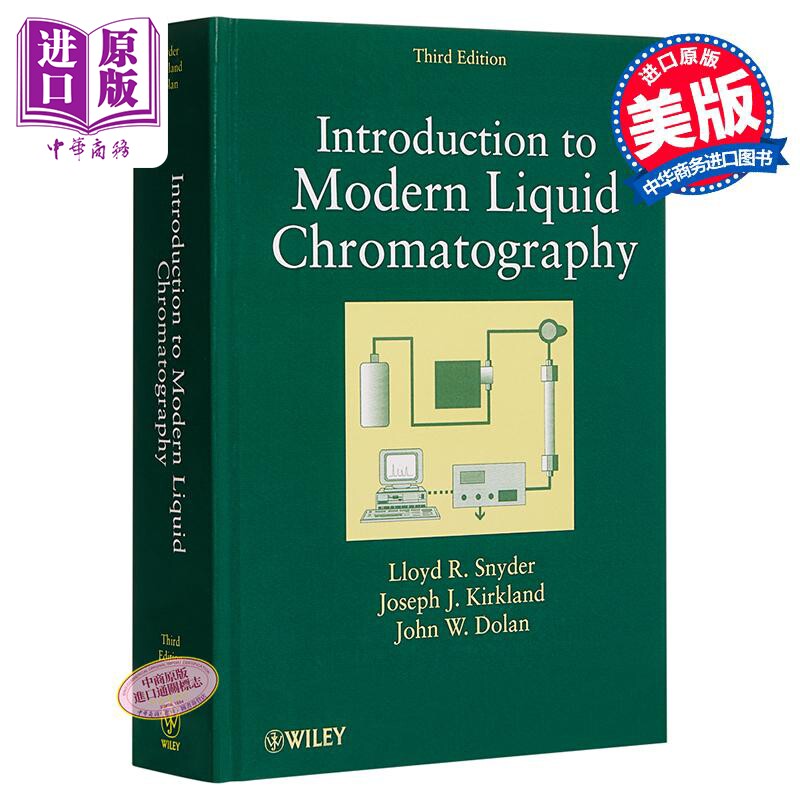
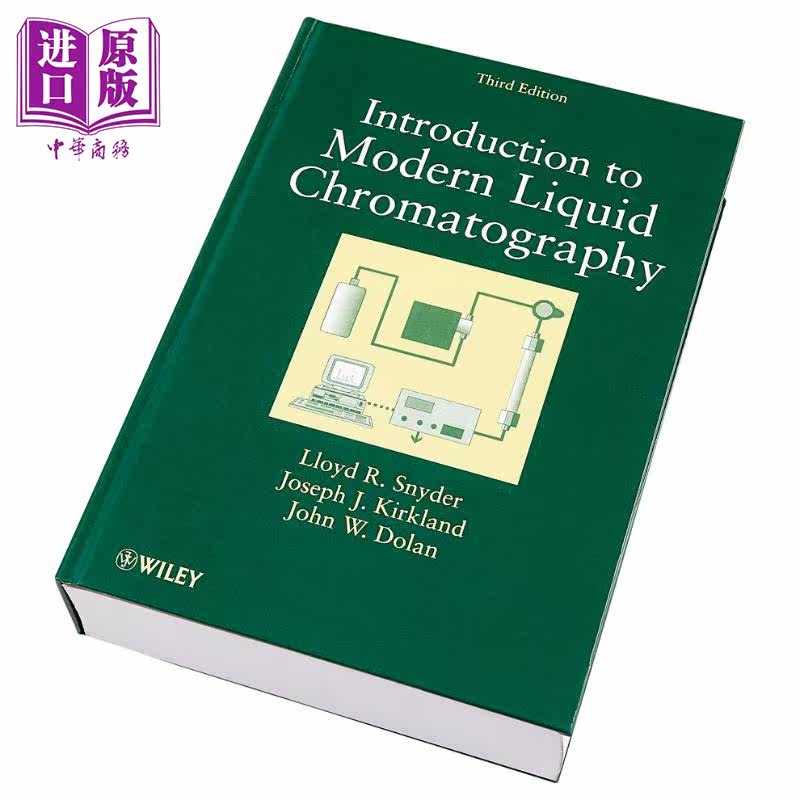
Spot Modern Liquid Chromatography Техническое введение 3 -е издание оригинальной английской версии введения в современную жидкую хроматограмму Lloyd Snyder Chemistry [Оригинальная китайская торговая палата]


Вес товара: ~0.7 кг. Указан усредненный вес, который может отличаться от фактического. Не включен в цену, оплачивается при получении.
Описание товара




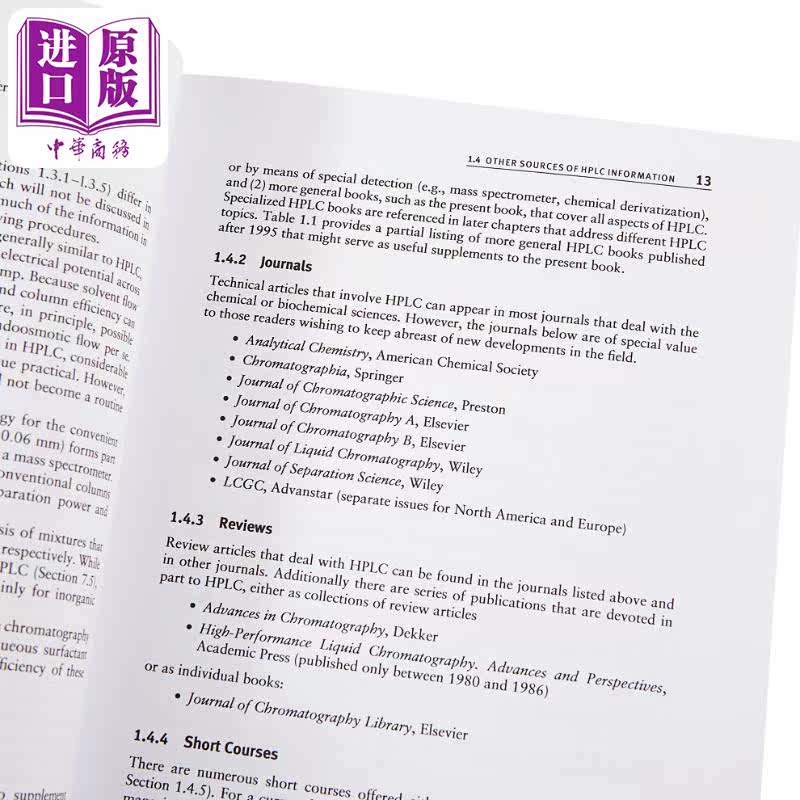
Введение в современную жидкую хроматографию, 3 -е издание
Основная информация
Hardcover: 960 pages
Publisher: Wiley-Blackwell; 3rd edition (12 Jan. 2010)
Language: English
ISBN-10: 0470167548
ISBN-13: 978-0470167540
Размеры продукта: 186 x 265 x 55 мм |
Параметры страницы предназначены только для справки, фактический продукт имеет преимущественную силу.
Введение в книгу
Жидкая хроматография с высокой эффективностью (ВЭЖХ) является ведущей технологией химического анализа и связанных с ними областей. Она может использоваться для разделения, анализа и (или) почти всех образцов.«Введение в современную твердую хроматографию» Снайдера и Киркленда всегда было важной монографией по технологии ВЭЖХ.
«Введение в современную технологию жидкой хроматографии (3 -е издание)» отражает текущую ситуациюдо настоящего времениРезультаты исследований и практическое опыт читателей, чтобы направлять свое понимание ВЭЖХ, понять его взаимосвязь с другими современными технологиями разделения и его историей, и постепенно заставляют читателей понимать следующие темы:
- Основа разлуки ВЭЖХ и обычные эффекты различных экспериментальных условий
- Инструмент и обнаружение
- Хроматографическая колонка-«сердце» системы ВЭЖХ
- Разделение обратной фазы, положительная фазовая хроматография, градиентное элюирование, двухмерное разделение и другие технологии
- Компьютерное моделирование, количественный и качественный анализ, проверка метода и контроль качества
- Анализ макромолекул (включая макромолекулы и синтетические полимеры)
- Ручное разделение, подготовка оборудования для разделения и образца
- Как систематически построить метод разделения ВЭЖХ
- Навыки обслуживания неисправностей 15, анализ экземпляров технологии и сбоя приборов и хроматографии
Введение в современную технологию жидкой хроматографии предназначено для удовлетворения потребностей разных читателей, независимо от того, являетесь ли вы новичком или экспертом, эта книга предоставляет вамПоследний и самый полныйИ простые для понимания знания о методах ВЭЖХ и их применениях.
Последнее издание авторитетной ссылки на ВЭЖХ
Высокопроизводительная жидкая хроматография (ВЭЖХ) сегодня является ведущим методом химического анализа и связанных с ним применений, с способностью разделять, ализ и/или очищать практически любую выборку. Ссылка на ВЭЖХ.blems that were troublEsome в прошлом и применение ВЭЖХ для новых видов образцов.
Это тщательно продуманное третье издание поддерживает сильные стороны предыдущего издания, в то же время значительно изменяя свою организацию в свете недавних исследований и опытаs by Представлен читателя с ВЭЖХ, его использование в отношении других современных методов разделения и его истории, а затем приводит к таким конкретным темам, как:
- Основание разделения ВЭЖХ и общие эффекты различных экспериментальных условий
- Equipment and detection
- Колонка -"heart" of the HPLC system
- Разделение с обратной фазой, хроматография с нормальной фазой, градиент выбран, twОсмеренное разделение и другие методы
- Компьютерное моделирование, качество и количественный анализ, а также проверка методов и контроль качества
- Разделение крупных молекул, включая как биологические, так и синтетические полимеры
- Хиральное разделение, приготовленное разделение и подготовка образцов
- Систематическое развитие разделения ВЭЖХ - новое в этом издании
- TroublВыбросы трюков, методов и тематических исследований как для оборудования, так и для хроматограмм
Разработано для удовлетворения потребностей полного спектра пользователей ВЭЖХ, от романов до экспертов, введения в современную жидкую хроматографию, третье издание предлагает самые современные, всеобъемлющие и доступныеble Обследование методов и применений ВЭЖХble.
Оглавление
PREFACE.
GLOSSARY OF SYMBOLS AND ABBREVIATIONS.
1 INTRODUCTION.
1.1 Background Information.
1.2 A Short History of HPLC.
1.3 Some Alternatives to HPLC.
1.4 Other Sources of HPLC Information.
References.
2 Основные понятия и контроль разделения.
2.1 Introduction.
2.2 The Chromatographic Process.
2.3 Retention.
2.4 Пиковая ширина и номер столбца n.
2.5 Resolution and Method Development.
2.6 Sample Size Effects.
2.7 RELATED TOPICS.
References.
3 EQUIPMENT.
3.1 Introduction.
3.2 Reservoirs and Solvent Filtration.
3.3 Mobile-Phase Degassing.
3.4 Tubing and Fittings.
3.5 Pumping Systems.
3.6 Autosamplers.
3.7 Column Ovens.
3.8 Data Systems.
3.9 Extra-Column Effects.
3.10 Maintenance.
References.
4 DETECTION.
4.1 Introduction.
4.2 Detector Characteristics.
4.3 Introduction to Individual Detectors.
4.4 UV-Visible Detectors.
4.5 Fluorescence Detectors.
4.6 Electrochemical (Amperometric) Detectors.
4.7 Radioactivity Detectors.
4.8 Conductivity Detectors.
4.9 Chemiluminescent Nitrogen Detector.
4.10 Chiral Detectors.
4.11 Refractive Index Detectors.
4.12 Light-Scattering Detectors.
4.13 Corona-Discharge Detector (CAD).
4.14 Mass Spectral Detectors (MS).
4.15 Other Hyphenated Detectors.
4.16 Sample Derivatization and Reaction Detectors.
References.
5 THE COLUMN.
5.1 Introduction.
5.2 Column Supports.
5.3 Stationary Phases.
5.4 Column Selectivity.
5.5 Column Hardware.
5.6 Column-Packing Methods.
5.7 Column Specifications.
5.8 Column Handling.
References.
6 Обработанная фаза хроматография для нейтральных образцов.
6.1 Introduction.
6.2 Retention.
6.3 Selectivity.
6.4 Разработка метода и стратегии для оптимизации селективности.
6.5 Невоковая обработанная фаза хроматография (NARP).
6.6 Special Problems.
References.
7 Ионных образцов: обратно-фаза, ионная и ионическая хроматография.
7.1 Introduction.
7.2 Уравновешивание кислотной базы и удержание обратной фазы.
7.3 Separation of Ionic Samples by Reversed-Phase Chromatography (RPC).
7.4 Ion-Pair Chromatography (IPC).
7.5 Ion-Exchange Chromatography (IEC).
References.
8 NORMAL-PHASE CHROMATOGRAPHY.
8.1 Introduction.
8.2 Retention.
8.3 Selectivity.
8.4 Method-Development Summary.
8.5 Problems in the Use of NPC.
8.6 Хроматография гидропфильного взаимодействия (HILIC).
References.
9 GRADIENT ELUTION.
9.1 Introduction.
9.2 Условия эксперимента и их влияние на разделение.
9.3 Method Development.
9.4 Large-Molecule Separations.
9.5 Other Separation Modes.
9.6 Problems.
References.
10 Компьютерная разработка метода.
10.1 Introduction.
10.2 Computer-Simulation Software.
10.3 Other Method-Development Software.
10.4 Компьютерное моделирование и разработка метода.
References.
11 качественный и количественный анализ.
11.1 Introduction.
11.2 Signal Measurement.
11.3 Qualitative Analysis.
11.4 Quantitative Analysis.
11.5 Summary.
References.
12 METHOD VALIDATION.
12.1 Introduction.
12.2 Terms and Definitions.
12.3 System Suitability.
12.4 Documentation.
12.5 Валидация для различных типов фармацевтических методов.
12.6 Bioanalytical Methods.
12.7 Analytical Method Transfer (AMT).
12.8 Регулировка метода или модификация метода.
12.9 Контроль качества и обеспечение качества.
12.10 Summary.
References.
13 Биохимические и синтетические полимерные разделения.
13.1 Biomacromolecules.
13.2 Молекулярная структура и конформация.
13.3 Специальные соображения для биомолекулы ВЭЖХ.
13.4 Разделение пептидов и белков.
13.5 Separation of Nucleic Acids.
13.6 Separation of Carbohydrates.
13.7 Separation of Viruses.
13,8 Хроматография по размеру-эксклюзии (SEC).
13.9 крупномасштабная очистка крупных биомолекул.
13.10 Synthetic Polymers.
References.
14 ENANTIOMER SEPARATIONS.
14.1 Introduction.
14.2 Background and Definitions.
14.3 Indirect Method.
14.4 Direct Method.
14.5 Peak Dispersion and Tailing.
14.6 Хиральные стационарные фазы и их характеристики.
14.7 Thermodynamic Considerations.
References.
15 PREPARATIVE SEPARATIONS.
15.1 Introduction.
15.2 Equipment for Prep-LC Separation.
15.3 Isocratic Elution.
15.4 Severely Overloaded Separation.
15.5 Gradient Elution.
15.6 Production-Scale Separation.
References.
16 SAMPLE PREPARATION.
16.1 Introduction.
16.2 Types of Samples.
16.3 Предварительная обработка твердых и полусмысленных образцов.
16.4 Подготовка образца для образцов жидкости.
16.5 Liquid-Liquid Extraction.
16.6 Solid-Phase Extraction (SPE).
16.7 Мембранные методы в подготовке образцов.
16.8 Методы подготовки образцов для твердых образцов.
16.9 Column-Switching.
16.10 Приготовление образцов для биохроматографии.
16.11 Sample Preparation for LC-MS.
16.12 Derivatization in HPLC.
References.
17 TROUBLESHOOTING.
Quick Fix.
17.1 Introduction.
17.2 Prevention of Problems.
17.3 Problem-Isolation Strategies.
17.4 Common Symptoms of HPLC Problems.
17.5 Troubleshooting Tables.
References.
Приложение I. Свойства растворителей ВЭЖХ.
I.1 Solvent-Detector Compatibility.
I.1.1 UV Detection.
I.1.2 RI Detection.
I.1.3 MS Detection.
I.2 Solvent Polarity and Selectivity.
I.3 Solvent Safety.
References.
Приложение II.
II.1 Sequence of Operations.
II.2 Рецепты для некоторых обычно используемых буферов.
Reference.
Index.
об авторе
Ллойд Р. Снайдер, доктор философии, является директором в LC Resources в Уолнат -Крик, штат Калифорния. Разработка, второе издание и всеобъемлющее высокопроизводительное градиентное элюирование, все PUblУправляется Wiley. Исключение жидкая хроматография, второе издание, все PUblУправляемый Wiley."LC Troubleshooting"колонка в журнале LCGC и коатор с Ллойдом Снайдером из TragblИзгнание систем LC и высокоэффективного градиентного элюирования.


